Health tracking anxiety is a growing concern for many people who use fitness trackers, wellness apps, and health monitoring devices. While tracking your wellness habits can provide useful feedback and help you stay consistent with healthy behaviours, excessive tracking often creates stress, decision fatigue, and feelings of inadequacy that work against the very health you are trying to improve. This article explores how wellness optimisation culture has shifted from helpful guidance to overwhelming pressure, and offers a more balanced approach that supports sustainable wellbeing without obsessive data monitoring.
If you have ever felt like you are failing at wellness despite doing many things right, you are not alone. Many people reach a point where they are tracking steps, sleep cycles, heart rate variability, macros, hydration, and meditation streaks, yet they feel more anxious about their health than ever before. The tools meant to help often become sources of stress themselves.
I want to share a small example from my own experience. Last week, I woke up feeling rested and ready for the day. Then I checked my sleep tracker. It told me I had only slept 6 hours and 43 minutes, my REM sleep was below average, and my readiness score was 68 out of 100. Suddenly, I did not feel rested anymore. I felt behind.
This is the paradox of modern wellness culture. We have more data than ever, yet we often trust the numbers more than we trust our own bodies.

How Wellness Tracking Became a Source of Stress
Wellness used to be simpler. You moved your body regularly, ate reasonably well, and paid attention to how you felt. If you had energy, slept well most nights, and felt capable in your daily activities, you were doing fine.
Today, wellness has become a data-driven pursuit. The 2025 Global Wellness Economy Monitor reveals that the wellness economy has doubled in size since 2013 and reached a new peak of $6.8 trillion in 2024. The wellness economy is projected to grow by 7.6% annually over the next five years, reaching an estimated $9.8 trillion in 2029. We track steps, sleep stages, glucose levels, heart rate variability, meditation minutes, water intake, macronutrients, screen time, and stress levels. Each metric promises insight, yet together they often create more confusion than clarity.
The rise of self-tracking culture began with a reasonable premise: what gets measured gets managed. If you could see your patterns, you could improve them. Early fitness trackers helped people move more. Sleep apps helped identify rest issues. Food journals revealed patterns that were easy to miss. However, somewhere along the way, the tool became the task. Instead of using data to support our health, we began optimizing our lives to satisfy the data. The question shifted from “Do I feel good?” to “Did I hit my numbers?”
The Growing List of Health Metrics to Manage
For many people, wellness now includes a long list of daily practices, each with its own app, tracker, or protocol:
- Morning routines: meditation, journaling, movement, breathwork
- Nutrition: meal timing, macro tracking, hydration monitoring, supplement schedules
- Fitness: strength training, cardio zones, recovery metrics, mobility work
- Sleep: bedtime routines, sleep tracking, environmental optimization
- Mental health: therapy, mindfulness apps, gratitude practices, digital boundaries
Each habit is supported by research and each one offers potential benefits, but maintaining all of them simultaneously requires significant mental energy, time, and focus. For many people, this becomes exhausting rather than energising.
The Hidden Costs of Fitness Tracker Anxiety
When wellness tracking becomes work, it changes the experience entirely. What was meant to support your life can begin to dominate it. Here are some of the less obvious costs that come with relentless tracking and optimisation.
How Health Data Creates Decision Fatigue
Imagine you are tired after a long day. Your fitness tracker suggests you should work out based on your activity levels. Your body feels depleted and is asking for rest. What do you do?
A decade ago, this would not have been a dilemma. You would listen to your body and rest. Now, you second-guess yourself. Is this genuine fatigue or avoidance? Should you trust how you feel or trust the data? What happens to your streak if you skip today?
Should you have a glass of wine, knowing it will affect your sleep metrics? Should you attend brunch with friends even though it disrupts your intermittent fasting window? Should you stay up to finish a meaningful conversation, or go to bed at your scheduled time to protect your sleep score?
You are no longer simply living, you are constantly managing, weighing, and calibrating your choices against competing data points. Health tracking anxiety and decision fatigue sets in not from a single moment, but from hundreds of small decisions that accumulate throughout your day.
Why Tracking Streaks Create Wellness Pressure
Tracking apps often rely on streaks to maintain engagement. Seven consecutive days of logged meals. Thirty days of meditation. One hundred days of step goals. Streaks are designed to motivate, and often they do, but over time the focus can subtly shift.
Instead of engaging in the habit because it feels supportive, the goal becomes protecting the streak. The visible chain of completed days starts to carry weight. When you miss one day, it doesn’t simply feel like a pause. It can feel like losing progress.
The reset to zero doesn’t reflect the context like travel, illness, workload, or family demands. It also doesn’t acknowledge that progress in health is cumulative and physiological, not digital. For some, this can create quiet pressure. A rest day feels risky, flexibility feels like inconsistency, and the metric becomes the reference point rather than your own internal cues.
Streaks aren’t inherently harmful, they can build momentum accountability, and create reward, but when consistency becomes rigid, rather than adaptive, wellness can begin to feel performative instead of supportive.
True long-term health allows for fluctuation, it values trends over perfection and recovery as part of progress.
The Comparison Trap: When Health Metrics Become Competitive
When health metrics are quantified, they become comparable. And when they become comparable, they often become competitive, even if that was never the intention.
Social fitness apps allow you to see how others are performing, leaderboards rank activity, achievement badges signal status. It’s too easy to begin comparing your numbers to those of friends, colleagues, or strangers online.
You may feel genuinely happy for them, but you may also feel inadequate by comparison. Wellness, which should feel personal and individual, starts to feel like a competition you did not sign up for.
The Wellness Tracking Stress Loop
Typically, you begin tracking wellness habits to reduce stress and improve health, but this is where the stress loop can begin. The data reveals you are not optimal, which is almost always the case because “optimal” is a moving target. You adjust your behaviour to improve the metrics and the new data reveals new gaps. You add more practices to address those gaps, your cognitive load increases, your stress rises, and your stress metrics worsen. To address your stress, you add stress-reduction practices to manage the stress created by your wellness practices.
The system is now self-perpetuating, and you are caught in the middle of it. This wellness tracking stress loop is one of the most common patterns people experience when optimisation becomes excessive.
The Illusion of Complete Control
One of the deeper appeals of wellness optimisation is the promise of control. If you do everything correctly like eating well, sleeping enough, exercising consistently, properly managing stress, and taking the right supplements, you will be healthy, energetic, and protected from illness.
This belief feels empowering, but it is also misleading. Genetics play a role in health outcomes and randomness exists. Sometimes people who follow every guideline still experience health challenges. Sometimes people who ignore conventional advice live long, healthy lives.
When wellness culture frames health as entirely within your control, any health issue begins to feel like a personal failure as though you simply did not optimise thoroughly enough. This is not empowerment, it’s a different kind of pressure.
What Gets Lost When You Obsess Over Health Data
Wellness optimisation has redefined what progress looks like, and in doing so, it has narrowed our understanding of health in ways that often work against us.
Health Progress That Fitness Trackers Cannot Measure
Traditional markers of wellness were broader and more qualitative. Do you feel energised most days? Are you sleeping reasonably well? Can you move through your daily activities without pain or significant fatigue? Do you feel capable and strong?
Now, progress is often measured through narrow, quantitative metrics. Did your VO2 max increase? Did you hit your protein target? Did you maintain a specific heart rate zone? Did your sleep efficiency improve by three percentage points?
These metrics can be useful, but they do not capture the full picture of health. The ability to play on the floor with your children without feeling winded is not tracked. The mental clarity that comes from consistent, adequate rest has no dashboard. The simple enjoyment of moving your body without watching a timer does not contribute to your active minutes goal.
If something is not measured, it often does not feel like progress, even when it genuinely is.
The Constantly Shifting Target
Optimisation culture continuously moves the goalposts. As soon as you feel confident with one metric, a new one emerges that suggests you are still falling short.
First, it was 10,000 steps per day, then it became zone-specific heart rate training, then heart rate variability, next sleep efficiency percentages, and onto continuous glucose monitoring and then biological age calculations. There is always a new frontier, a new metric, a new standard to meet. You can never be fully optimised because the definition of “optimal” keeps evolving.
How Tracking Everything Creates All-or-Nothing Thinking
Optimisation culture often encourages perfectionism. If you are going to do something, it should be done optimally. Anything less feels like a compromise or failure.
Meditated for five minutes instead of twenty? Not enough. Attended the gym but did not follow your prescribed program? Wasted session. Ate well throughout the day but had dessert in the evening? You broke your streak.
This all-or-nothing thinking overlooks a fundamental truth: some is almost always better than none. A five-minute meditation still offers value. An imperfect workout still benefits your body. A day of mostly nourishing choices is still a day that supported your health.
However, when the goal is optimisation, “good enough” often feels like giving up and instead creates a guilt spiral.
How to Be Healthy Without Obsessing Over Metrics
You were never meant to be a perfectly calibrated system. You are a human being, you have good days and difficult days, you make choices based on energy, context, relationships, and a range of factors that have nothing to do with optimisation. That is not a flaw. That is normal.
Real wellness isn’t about perfection. It is about building sustainable practices that support your life without overwhelming it. It’s about progress that shows up in how you feel, not only in what the data reflects.
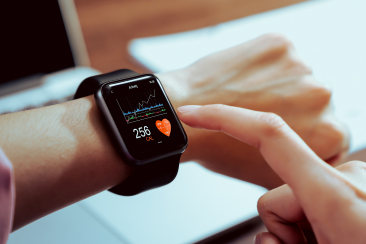
Here is what a more balanced approach can look like.
10 Ways to Reduce Health Tracking Anxiety and Build Sustainable Wellness
These are not strict rules. They are suggestions based on what tends to support long-term wellbeing without creating additional stress. Take what feels useful and leave what does not.
1. Identify Your Personal Health Goals Beyond the Data
Before you track anything, ask yourself why it genuinely matters, not what it will optimise, but how it will improve your actual lived experience.
Why do you want to strength train? Perhaps you want to perform everyday activities without strain and fatigue, perhaps you want to feel physically capable, maybe you enjoy the ritual of training. These are sustainable motivations rooted in real life, not abstract performance metrics.
When your reasons connect to how you want to feel or what you want to be able to do, you create motivation that doesn’t rely on gamification or external validation.
You might try this: Choose your top three wellness practices. For each one, complete this sentence: “I do this because it helps me feel, do, or be _____.” If your answer focuses only on metrics, consider whether there is a deeper reason underneath.
2. Choose Which Health Metrics Actually Matter
Not everything benefits from being measured, tracking too many things can often add cognitive load without providing useful insight. Consider choosing one or two metrics that genuinely inform your decisions, track those with intention and let the rest go.
Ask yourself:
- Does this data actually change my behaviour in a helpful way?
- Would I maintain this habit even without tracking it?
- Does checking this metric reduce my stress or increase it?
If a metric creates anxiety without offering actionable feedback, it may not be worth tracking.
You might try this: List everything you currently track. For each item, ask: “What decision does this help me make?” If the answer is unclear, consider whether you need to continue measuring it.
3. Trust Your Body’s Signals Over Fitness Tracker Data
Your body provides constant feedback. Sometimes that feedback is more relevant than any metric.
Instead of asking, “What does my sleep score say?” you might ask:
- Do I actually feel rested?
- Is my energy steady, or do I feel depleted by mid-afternoon?
- Am I waking naturally, or am I fighting my alarm?
Instead of asking, “Did I hit my step count?” you might ask:
- Did I move in ways that felt good today?
- Do I feel energized or drained?
- Is anything uncomfortable or tight?
These qualitative observations are data too and are often more meaningful than numbers on a screen.
You might try this: Before checking any app tomorrow morning, spend a few moments noticing: How does my body feel? What is my energy like? What is my mood? You may begin to notice patterns that the apps do not capture.
4. Build Flexibility Into Your Routines
Rigid routines break when life becomes unpredictable, which it inevitably does. The goal is not perfect consistency the goal is creating habits flexible enough to adapt to real circumstances.
Instead of “I must work out at 6 AM for 60 minutes,” consider “I will move my body most days in ways that suit my schedule and energy.”
Instead of “I meditate for 20 minutes every morning without exception,” consider “I will create moments of stillness when I need them.”
This is not lowering your standards. It is being realistic about how sustainable habits actually work.
You might try this: For each of your main habits, identify three versions:
- The ideal version (when conditions are favourable)
- The realistic version (when life is normal)
- The minimum version (when things are chaotic)
Example:
- Ideal: 45-minute yoga session
- Realistic: 15 minutes of stretching at home
- Minimum: Three intentional deep breaths when you feel tense
All three count. All three support your wellbeing.
5. Acknowledge the Process, Not Only the Outcome
Optimisation culture celebrates outcomes: weight lost, personal records achieved, streaks maintained. However, outcomes are often beyond your direct control. What you can control is showing up for yourself in small, consistent ways.
That might look like:
- Choosing rest when your body genuinely needs it
- Eating a nourishing meal without needing to document it
- Going for a walk because it feels good, not because you need the steps
- Skipping a workout that would cause harm and choosing gentler movement instead
These choices may not move your metrics, but they build the foundation of sustainable health.
You might try this: At the end of each week, note three times you honoured your wellbeing, regardless of what any data said. Notice how this shifts your sense of what success looks like.
6. Take Regular Breaks from Wellness Tracking
Tracking can be helpful, but it can also become compulsive. Consider scheduling periods where you do not track anything at all, maybe just A weekend, A week, or A holiday. Whatever feels manageable for you.
Notice what happens:
- Do you still maintain your habits?
- Do you feel more or less stressed?
- Do you tune into your body’s signals more clearly?
- Are your choices actually that different?
Many people find they have internalised their healthy habits and no longer need constant external monitoring.
You might try this: Choose a low-pressure period and take a complete tracking break, no apps, no logging, no metrics. Pay attention to how it feels, you can always return to tracking if it serves you.
7. Remember That Flexibility Is Part of Sustainable Health
In optimisation culture, any deviation from the plan feels like failure. In sustainable wellness, flexibility is expected and valuable.
Your body needs rest days, your mind benefits from spontaneity, your life requires space for joy that doesn’t always fit neatly into a protocol.
Someone who eats nourishing meals most of the time and enjoys treats without guilt is healthier than someone who eats “perfectly” while experiencing constant food-related anxiety.
You might try this: Build in one flexible day each week where you do not track anything and simply live. Notice that this does not derail your progress, it often makes your habits more sustainable.
8. Focus on Adding Healthy Habits, Not Eliminating “Bad” Ones
Optimisation culture often emphasises restriction: reduce sugar, eliminate alcohol, avoid processed foods, limit screen time.
However, sustainable change frequently works better through addition. What if instead of “stop eating junk food,” you focused on “add more vegetables I genuinely enjoy”?
Instead of “quit late-night snacking,” what about “eat more satisfying meals during the day”?
Instead of “reduce phone time,” consider “spend more time doing things that bring me joy”?
When you fill your life with nourishing practices, the less supportive ones often diminish naturally, without the psychological weight of deprivation.
You might try this: Create a “more of this” list instead of a “less of that” list. What gives you energy? What feels good? What do you want more of in your daily routine?
9. Speak to Yourself with the Same Kindness You Would Offer a Friend
The optimisation mindset often includes an undercurrent of self-criticism: you are not doing enough, you should be better, why can you not just follow the plan?
Consider what you would say to a friend in the same situation, you would likely offer understanding, not judgment. When you miss a workout, you would not tell a friend they are lazy or undisciplined. You might say, “You were exhausted. Rest is important too.”
That same compassion applies to you.
You might try this: When you notice self-critical thoughts about your wellness habits, pause and ask: “What would I say to a friend in this situation?” Then extend that same kindness to yourself.
10. Your Life Is Not a Project to Optimise
Wellness practices exist to support your life, not to become your life. They should help you do the things you enjoy, connect with the people you care about, and feel comfortable in your body.
If your wellness routine prevents you from spontaneous meals with friends, weekend plans, or being fully present because you are preoccupied with metrics, something may need to shift.
The healthiest people are not always the most optimised. They are the people who have found sustainable practices that enhance their lives without consuming them.
You might try this: Ask yourself regularly: “Is my approach to wellness helping me live better, or is it interfering with living?” Let your honest answer guide any adjustments you make.
Overcoming Health Tracking Anxiety: What You Need to Remember
You do not have to track everything. You do not have to optimise everything. You do not have to achieve perfection.
You are allowed to:
- Move your body because it feels good, not because an app told you to
- Eat without logging every detail
- Sleep without analysing the data
- Have phases of focused attention on wellness and phases where you simply maintain
- Choose connection over metrics
- Trust your body over the algorithm
- Be inconsistent and still be healthy
- Rest without guilt
- Live without constantly measuring
The irony is that relentless optimisation often undermines the health it promises. The constant tracking does not make most people healthier, it makes them anxious. When fitness tracker anxiety or wellness tracking stress becomes the dominant experience, the tools have stopped serving their purpose.
Real wellness is not found in perfect numbers, it’s found in sustainable, imperfect, human practices. It’s caring for yourself with patience and flexibility, it’s listening to your body, and it’s being present in your life.
Data can inform your choices. It should not dictate them.
Your wellness appears in moments that apps cannot measure: how you feel when you wake, the ease of moving through your day, enjoying activity without tracking it, nourishing yourself without logging it.
These things matter. They count. They are real.
Track what genuinely helps you, let go of what doesn’t. Build habits that serve you, and most importantly, live the life your wellness practices are meant to support.
You are not a system to optimise. You are a person to care for. Caring for yourself looks less like perfection and more like presence, less like rigid control and more like compassionate flexibility. You are enough, imperfect data and all.
In summary: Real wellness is about feeling good in your body and mind, not about achieving flawless metrics. Track what provides genuine value. Trust yourself more than the apps. Build habits that fit your actual life. And remember: the most meaningful measure of health is often the one you rarely think about because you are too engaged in living well.