Consistency is the difference between people who achieve their health and fitness goals and those who don’t, learning how to stay consistent with exercise is easily achievable by utilising a simple, 4-step approach.
After 17 years of coaching and working with hundreds of clients, I’ve become convinced of one thing: consistency matters far more than finding the perfect workout, the perfect diet, or the perfect level of motivation.
Most people think they struggle with fitness because they lack discipline, willpower, or motivation. In my experience, that’s rarely the real problem, people don’t fall into the start and stop yo-yo because they’re lazy or weak, it happens because their system doesn’t fit their life.
When life gets busy, as it inevitably does, their plan and intentions fall apart. They miss a few workouts, feel like they’ve failed, and eventually give up altogether.
The good news is that consistency isn’t something you’re born with, it’s something you build, and anyone can do it.
In this article, I’ll walk you through the same four-part framework I use with every client to help them build consistency that lasts, regardless of their schedule, fitness level, or previous experience.
Why Most People Fail at Consistency
It’s Not About Willpower
People always assume consistency requires willpower, that if they just had more discipline, more motivation, or more mental toughness, they’d stick with it. But willpower is a finite resource, and the more you use it in one area of your life, such as work stress, family decisions, or financial choices, the less you have left for fitness. By the time you get home after a long day, your willpower tank is empty, and suddenly that workout feels impossible even though you wanted to do it this morning.
This is why motivation and willpower don’t work for building lasting consistency. You can’t force your way to real change, you’ll eventually run out of mental energy.
What actually works is a system, a framework that doesn’t rely on you having unlimited discipline or willpower. Once you have that, consistency becomes almost automatic.
It’s Not About Finding the Perfect Program
What’s perfect for one person could be a complete nightmare for someone else. I’ve seen people transform on the simplest programs that included three workouts a week with basic movements. I’ve also seen people quit on elaborate, “optimal” programs they found online that promised incredible results.
At this point in my career, the amount of people I’ve worked with are in the thousands, and the commonality between people who succeed isn’t that they are perfect, more disciplined, nor that they followed common advice on the things they “should do”. The common thread is that they took the time to slowly implement realistic habits and systems that actually fit their life, removed the idea of being perfect, and instead focused on what they could actually stick with it.
The Real Reason People Quit
The reason people quit on their health and fitness plans usually occurs due to one of the following reasons:
- Their program doesn’t account for their real life. Their program could be too rigid, doesn’t fit their schedule, or doesn’t account for their body’s needs. When life shifts, their program can’t adapt with it.
- They have no real reason for why they’re on this journey, no connection to what they’re building toward, so “I should work out” doesn’t compete with everything else demanding their time and attention.
- They’re trapped in all-or-nothing thinking, where one missed workout becomes “I’m not consistent,” which becomes “why bother?” This pattern—perfectionism and all-or-nothing thinking—is actually what makes people more likely to quit.
- They’re doing it entirely alone with no one checking in, no feedback, no support system to keep them accountable. This is a very lonely journey and relies too much on self-motivation and reliance.
When any of these things are true, consistency becomes nearly impossible, and that’s not a personal failure, that’s a framework problem. A few years ago, I worked with a client who was convinced she needed to train five days per week to get results. The problem was that her job, family responsibilities, and energy levels realistically allowed for three sessions most weeks. Every time she missed one of those planned five workouts, she felt like she was failing.
So we changed the goal.
Instead of chasing an ideal schedule, we built a plan around three sessions per week. She stopped feeling guilty, started succeeding more often, and became dramatically more consistent. The difference wasn’t motivation, the difference was that the system finally matched reality.
This is something I see time and time again, and that’s why I follow this 4-step framework.
How To Stay Consistent With Exercise: The 4 Pillars
I’ve identified four things that separate people who stick with fitness from those who don’t, I see these patterns over and over again across every client I work with. Here’s what actually builds consistency:
Pillar 1 — Personalisation
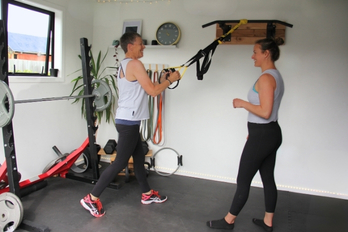
Generic programs fail because they fundamentally ignore individual reality, and this is where most people get stuck. When I work with someone, their program fits their actual schedule, not some ideal version of their schedule. It accounts for their likes and dislikes, their body, their previous injuries, their imbalances, and their movement patterns, and it’s flexible enough to adapt when life inevitably shifts and changes.
Generalised programming constricts the individualisation that’s necessary to continually see progression. When someone is met with resistance when they inevitably cannot perform a movement due to injury or fitness level, or miss a whole workout due to schedule demands, this resistance adds up to create more barriers. If specific needs are continually ignored, these built up barriers make the idea of reaching their goals harder, until at one point, it feels insurmountable enough that they quit. When they have personalisation in their program, their able to reduce the friction between their bodies and what they’re being asked to do.
Programs that account for individual anatomy, schedules, life demands, equipment availability, and current motivators simply work better because they meet people where they actually are instead of asking them to fit into a pre-made mould.
Pillar 2 — Progressive Adaptation
Your body adapts to training, your life changes constantly, and if your program never evolves, you either get bored, you plateau or your plan stops fitting your life. Real consistency means showing up regularly, but the program itself has to evolve alongside you.
I’ve worked with people over two, three, even seven years, and their program doesn’t look the same as it did in their first month or first year because we’re adjusting to their body’s adaptations and their life changes. They stay engaged because they’re still progressing, still feeling the sense of advancement instead of just repeating the same thing forever.
Variation and progression keeps you mentally engaged, aids in injury prevention and allows you to improve and expand throughout a whole variety of health and fitness components.
Pillar 3 — Accountability & Support
I’ve watched accountability become the cornerstone of people’s success, because accountability significantly increases the likelihood of following through on goals. Needing accountability isn’t a weakness, it’s how we, as humans are built.
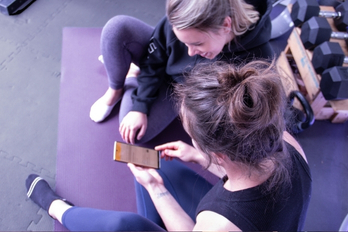
Accountability is built into the framework of working with a coach, but accountability doesn’t just have to come from a coach alone. It can be from anyone like a training partner, a friend who knows your goals, an online community, or your partner. The key is that someone else knows what you’re trying to do so it helps turn your intentions into actions and allows you to feel that you’re not alone in your endeavours.
Pillar 4 — Clear Why
Establishing why you want to do something is extremely important for long term success. ” I want to get fit” is too vague of a notion for maintaining consistency for the long run. When we dig a littler deeper and establish a clearer why, such as “I want to feel capable in my own body again” or “I want to have energy to do the things I love” or “I want to feel genuinely confident,” that’s when something shifts.
Your why needs to be connected to your actual life and your actual values, not some abstract fitness goal. When your training is linked to what matters to you, consistency becomes natural because you’re not working out for some vague idea. You’re building something that directly impacts your life.
How to Build Your Consistency Framework
Here’s how you can implement these four pillars to create a framework for yourself:
Step 1 — Personalise Your Program
Be honest about your schedule, and this means your actual schedule, not what you wish it was or what you think it should be. If you have 20 minutes three times a week, that’s your starting point, not five days a week or an hour, just what you actually have available.
Account for your body and any issues you’re dealing with because ignoring them until they cause injury will stop your consistency. Do you have old injuries, movement restrictions, or imbalances? Build all of that into your program from day one.
Pick something you actually want to do. If you hate running, a running program won’t stick no matter how effective it’s supposed to be. Personalisation doesn’t have to be complicated, just find a type of movement that works for your life and your body and provides the path of least of resistance.
Step 2 — Build in Adaptation
Think about how you would like your program to progress before you start. Will you add more weight, days, time, reps, new movements, or different rep ranges? Have this figured out before you begin so you know a progression you’re working toward once you feel ready.
Build in options for when life happens because life always does. You’re traveling, you’re sick, you get injured. What’s your scaled-back version? Having a plan B means you can stay consistent even when circumstances shift.
Check in with yourself monthly and ask whether you’re progressing, whether this program still fits your life, and what needs to change.
Step 3 — Create Accountability
Tell someone specifically what you’re doing, not vaguely like “I’m going to work out more,” but specifically like “I’m training Monday, Wednesday, and Friday at 6am.” You can be adaptable to this, but setting your intention makes an impact.
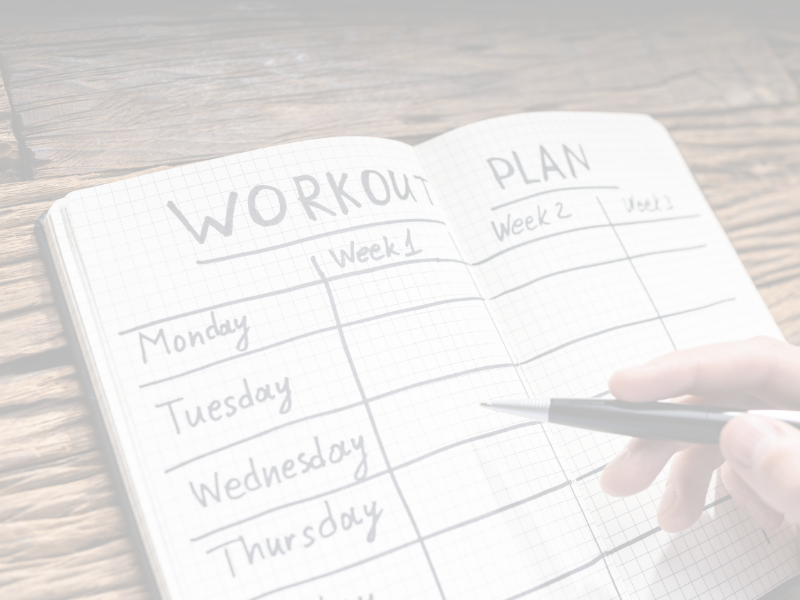
Track it visibly, whether that’s a calendar, an app, or a journal, because there’s something powerful about seeing your consistency streak grow over time.
Treat it like an appointment and not a maybe. It’s an actual appointment with yourself that you don’t skip unless something’s genuinely urgent, which creates the behavioral pattern you’re looking for.
Step 4 — Connect Your Why
Write down what you’re actually building toward. Ask yourself specifically: are you building strength, more energy, confidence in your body, or connection to your physicality?
Connect it to your life and what will actually change when you achieve this, thinking about how your day-to-day will feel different and what becomes possible.
Revisit this monthly, especially when motivation dips, which it will, because remembering why you started pulls you back when it’s easy to drift.
The One Thing Most People Miss
Here’s what I see constantly: people respond to inconsistency by not chaging the system, but rather trying harder within the same broken system.
The problem is that effort alone can’t fix a system that was never designed to support consistency in the first place, it’s a bit like trying to keep water in a bucket with a hole in the bottom. You can pour faster, work harder, and keep expending more energy, but none of that addresses the actual issue. Until the hole is fixed, the outcome remains the same.
Fitness works much the same way. If your current approach isn’t producing consistency, the answer usually isn’t to demand more of yourself. It’s to step back and ask whether the framework itself needs to change.
That’s why personalisation matters and why programs need to adapt as your life changes. It’s why accountability is so powerful, and why having a meaningful reason behind what you’re doing makes such a difference when motivation inevitably fluctuates.
You need a system that works with you, not against you.
The Bottom Line
After 17 years of coaching, I’ve learned that consistency isn’t about being the most motivated person in the room.
It’s about creating a system that you can keep coming back to when motivation fades.
The people who succeed aren’t necessarily more disciplined than everyone else they simply match their framework to their reality.
A framework that:
- Fits their schedule
- Adapts as life changes
- Provides accountability
- Connects to something meaningful
That’s what creates lasting change, not perfection, nor intensity, or endless willpower.
Consistency isn’t something you force, it’s something you design.
Ready to Build Your Framework?
If you want to explore what this looks like specifically for your life, let’s talk about it.
Join my email community and get my High Achievers’ Fitness Guide, a practical breakdown of how to personalize, adapt, build accountability, and find your why. Find out if hiring a personal trainer is for you, or book a free consultation where we can talk through what’s been holding you back and what a framework built specifically for you could look like.